Fluoropolymer Film Production Lines | PTFE, PFA, FEP, ETFE, PVDF
Date:2019-03-20 11:01:39
Fluoropolymer Film Production Lines | PTFE, PFA, FEP, ETFE, PVDF
Product Line Overview
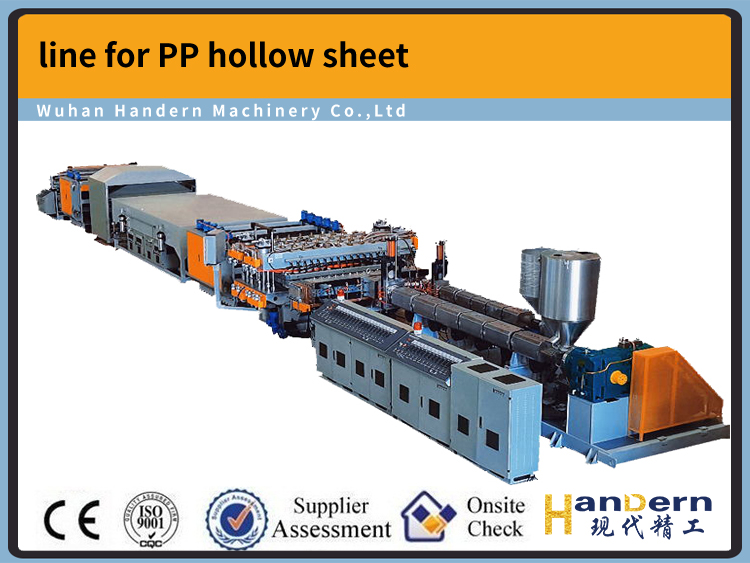
We supply fluoropolymer film production lines covering the two fundamentally different process families in this material group: skiving lines for PTFE and melt-extrusion lines (cast film and blown film) for thermoplastic fluoropolymers including PFA, FEP, ETFE and PVDF. Because fluoropolymers differ sharply in melt viscosity, corrosion behavior and crystallization characteristics, lines are engineered around the specific resin — not offered as a generic “one-machine” solution. Each line covers material pretreatment, forming, thickness gauging, tension-controlled winding and, where required, downstream stretching, annealing or electrode deposition, delivering films for semiconductor, new energy, electronics, chemical processing and architectural applications.
1. PTFE Skived Film Production Line
Film Characteristics and Positioning
PTFE is not melt-processable by conventional extrusion. Skived PTFE film is produced by compression molding PTFE resin into a cylindrical billet, sintering the billet, and then precision-skiving continuous film from the rotating billet on a specialized lathe. Skived film retains PTFE's signature properties: the lowest friction coefficient of any solid material, extreme chemical inertness, service temperature from —180°C to +250°C, and excellent electrical insulation. The process yields film in the 0.01 — 0.50 mm thickness range, with unsintered or semi-oriented variants available depending on downstream orientation treatment.
Target Applications
Semiconductor high-purity isolation and wafer handling protection, lithium battery cell insulation and pack sealing, photovoltaic backsheet and module isolation, chemical processing gaskets and liners, electrical insulation, and release films for composite molding.
Process Route
The line integrates four core stages: billet preparation (compression molding + sintering), precision skiving, orientation/calendering (optional) , and winding. Billet density after sintering must reach 2.15 — 2.20 g/cm³ with no porosity, cracks or delamination; end-face flatness tolerance is held to ≤0.1 mm. Skiving is performed on a dedicated PTFE lathe equipped with a large-diameter chuck, high-precision spindle, and constant-tension winding system. Spindle speed is steplessly adjustable (0 — 500 r/min), and diamond tooling is standard for ultra-thin film to maintain edge sharpness and surface finish.-
Typical Technical Specifications
-
Finished film width: up to 1,200 — 2,000 mm (line-dependent; wide-format skiving configurations available)-
-
Film thickness: 0.01 — 0.50 mm (skived film); thicker skived sheet up to 3.00 mm on heavy-duty configurations
-
Thickness tolerance: ±5% or tighter (industry common range ±10% — ±15%)
-
Width tolerance: ±0.5 mm (controlled range)
-
Winding tension: 5 — 15 N constant-tension control to prevent tensile deformation-
-
Billet size: diameter φ300 — 1,000 mm, length up to 1,600 mm for large-billet skiving machines
Final guaranteed values are subject to the agreed process guarantee and the target film specification.
2. Thermoplastic Fluoropolymer Melt-Extrusion Line (PFA / FEP / ETFE / PVDF)
Film Characteristics and Positioning
PFA, FEP, ETFE and PVDF are melt-processable fluoropolymers and are produced into film by cast film extrusion (the dominant industrial route for high-precision thin film) or blown film extrusion (for tubular film and thicker gauges). These films combine broad service temperature windows with chemical resistance and electrical performance: FEP film is serviceable from —200°C to +205°C and is widely used as release film in FPC lamination and semiconductor packaging; PFA film extends continuous service to 260°C with superior chemical stability and stress-crack resistance; ETFE film offers >90% light transmission, self-cleaning surface behavior and a 25 — 35 year outdoor service life in architectural membrane structures; PVDF film is valued for weather resistance, UV stability and piezoelectric functionality after stretching and poling.-
-
Target Applications
Semiconductor packaging release films, FPC lamination and PCB coverlay,新能源 battery tab insulation and cell isolation, photovoltaic backsheet inner layers and flexible module frontsheets, chemical storage tank liners, architectural and tensile membrane structures, medical/pharmaceutical sterilization packaging, piezoelectric sensors and transducers, and wire/cable insulation.-
-
Process Route
The standard cast film line follows: material drying → single-screw extrusion → melt pump → T-die (hanger-type) → multi-stage chill roll casting → thickness gauging → pulling → slitting → winding. For piezoelectric PVDF, an additional machine-direction stretching (and optional transverse stretching) stage is integrated between casting and annealing, followed by electrode deposition and poling in a downstream station. Blown film lines follow: extrusion → annular die → air inflation → air-ring cooling → pulling → slitting → winding.-
All melt-contact components — screw, breaker plate, melt pump, die and adapters — are fabricated from corrosion-resistant, high-temperature alloys, because fluoropolymer melts release corrosive species at processing temperatures and attack standard steels.-
Typical Technical Specifications (Cast Film Route)
-
Finished film width: 1,250 — 2,500 mm (PVDF cast lines up to 2,500 mm; ETFE/PFA lines commonly 1,250 — 1,600 mm)-
-
Film thickness: 20 — 40 μm (PVDF); 20 — 200 μm (ETFE/PFA/PEEK family)-
-
Line speed: 5 — 100 m/min (PVDF cast); 8 — 30 m/min (ETFE)
-
Extrusion temperature: barrel 310 — 350°C, die 340 — 365°C (PFA), with ±2°C die-temperature control-
-
Screw L/D: 20:1 — 25:1; compression ratio 2.5:1 — 3.5:1-
-
Die lip opening: 0.1 — 0.5 mm, with ±0.01 mm lip-gap precision
-
Chill roll gradient: first roll 100 — 200°C, second 80 — 150°C, third 40 — 90°C, controlling crystallinity to 20 — 30%-
-
Winding tension: 0.5 — 2.0 N/cm closed-loop control
Typical Technical Specifications (Blown Film Route, PFA/FEP)
-
Film thickness: 25 — 500 μm
-
Film width: up to 1,600 mm
-
Blow-up ratio: 2 — 4; pulling ratio 3 — 6
-
Pulling speed: 30 — 60 m/min-
PVDF Piezoelectric Film — Dedicated Stretching Module
-
Stretch ratio: 3.5 — 5.5; stretching temperature 80 — 100°C
-
Post-stretch annealing: 60 — 100°C for approximately 30 min
-
Poling: DC field 2,000 — 4,000 V/cm at 60 — 90°C; achievable piezoelectric coefficient d₃₃ = 10 — 34 pC/N-23
3. Core Engineering Configuration (Common to Fluoropolymer Lines)
-
Material pretreatment: dehumidified drying (PFA: 120 — 150°C / 2 — 4 h), screening and preheating to prevent bubbles and ensure stable plasticization.-16
-
Extrusion system: single-screw extruder with fluoropolymer-specific screw geometry; melt pump for pressure stabilization; corrosion-resistant alloys throughout the melt path.
-
Die and casting: hanger-type T-die with ±0.01 mm lip-gap adjustment; multi-stage chill rolls with independent temperature control for crystallinity management.
-
Thickness gauging: inline beta-ray or X-ray gauging with closed-loop feedback to the die bolts or melt pump.
-
Stretching / annealing (where applicable) : MDO roll stacks for PVDF piezoelectric film; independent annealing ovens for stress relaxation.
-
Winding and slitting: constant-tension winder with taper-tension capability; slitting unit for narrow-width rolls.
-
Control system: PLC + touchscreen HMI with full-line interlock, recipe management and process data traceability.-11
-
Environment control (cast film) : cleanroom-compatible enclosure, 23 ± 2°C and 45 — 60% RH for dimensional stability and surface cleanliness.-16
4. Quality and Delivery
-
Lines are configured to the specific fluoropolymer: PTFE skiving lines and melt-extrusion lines are separate product families, and within melt-extrusion, screw/die design is matched to the resin's melt viscosity and corrosion profile. Technical specifications are subject to the agreed Process Guarantee.
-
Hybrid melt-extrusion platforms can be configured for multi-resin production (e.g., PFA/FEP/ETFE on a single cast line with changeover procedures), improving asset utilization across product mixes.
-
Scope of supply options: billet molding and sintering systems (PTFE), inline thickness gauging, corona/plasma surface treatment, cleanroom enclosures, solvent recovery (where applicable), slitting and自动 winding.
-
Delivery documents: mechanical and electrical drawings, process parameter windows by resin, maintenance manuals, spare parts lists, and operator training.