Hollow Sheet Packaging Boxes Offer a New Solution for EU Compliance
DATE:2026-08-18 14:04:41 / READ: / SOURCE:This station
I. After August, Your Cardboard Boxes May Not Even Be Allowed Through EU Customs
On August 12, 2026, the EU's PPWR (Packaging and Packaging Waste Regulation, EU 2025/40) officially came into full effect. This is not a "recommendation," but a directly binding regulation—covering all materials and all packaging circulating in the EU market.
A Dongguan-based company manufacturing charging pile accessories had a full container shipped to the Port of Hamburg. Because the outer cartons lacked the German EPR (Enhanced Packaging Resource Recycling) registration mark, the container was detained and inspected by customs, resulting in a three-day delay. The goods, valued at over 300,000 RMB, were simply abandoned by the customs clearance agent because the cardboard boxes lacked a compliance label.
This is just the aftermath of the old directive. With the full implementation of PPWR, enforcement will only become stricter. Article 175 of the preamble clearly states that market surveillance information and the Customs System (ICSMS) must be automatically integrated, significantly improving the efficiency of border interception of non-compliant packaging.

II. The Three Dilemmas Faced by Cardboard Boxes under PPWR
First Dilemma: EUDR Supply Chain Traceability Pressure. On December 30, 2026, the EUDR (EU Zero Deforestation Regulation) will be enforced on large and medium-sized enterprises. Cardboard boxes and other paper packaging will still be subject to EUDR regulations unless they are 100% made from recycled paper—you must prove where the raw wood for the paper comes from and whether deforestation occurred. This means that every batch of exported cardboard boxes requires complete supply chain traceability documentation; FSC/PEFC certificates and proof of logging legality are indispensable.
Second Dilemma: The Hard Constraint of 50% Porosity. Article 84 of the PPWR preamble stipulates that the porosity of combined packaging, transport packaging, and e-commerce packaging should not exceed 50%. Many companies, in pursuit of "absolute safety," layer upon layer of packaging, with the product itself only occupying 30% of the outer box volume, the rest being pearl cotton and bubble wrap. After August, these practices will be blatant evidence of violations at EU ports.
Third Dilemma: Recyclability Level Threshold. By 2030, all packaging must be assessed for recyclability at three levels: A, B, and C. Packaging below level C will be banned from the market; from 2038 onwards, only level A/B will be allowed. Laminated moisture-proof cardboard boxes, due to their paper-plastic composite structure, are difficult to recycle and have a high rating risk.

III. Hollow Sheet Packaging Boxes: Bypassing the Compliance Deadlock of Cardboard Boxes at the Root Faced with the dual pressure of PPWR and EUDR, more and more export companies are seeking alternatives. Hollow sheet packaging boxes made from polypropylene (PP) are becoming a new compliance option.
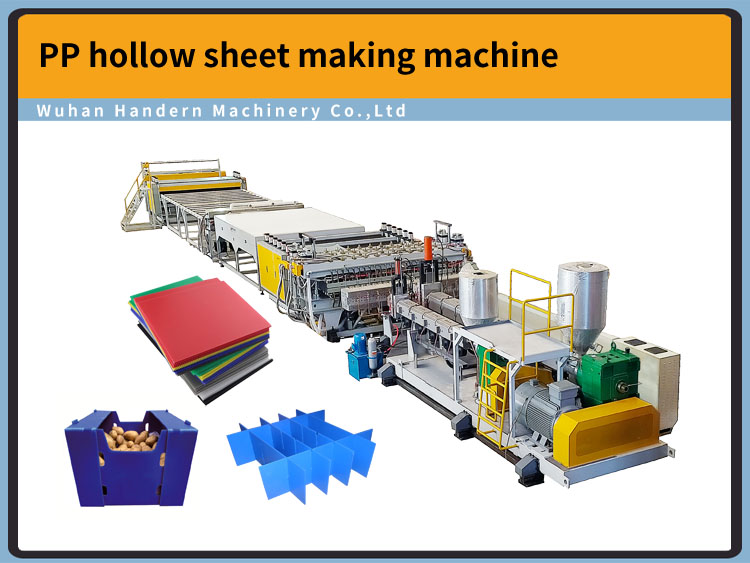
Hollow sheet (also known as double-walled board) is a lightweight board material made from PP or PE as raw materials, with added functional fillers such as calcium carbonate and phosphogypsum, produced through extrusion molding. Its core structure is a hollow mesh, possessing multiple properties such as moisture resistance, pressure resistance, and recyclability.
From a compliance perspective, hollow sheet packaging boxes have three natural advantages:
Firstly, the material is single and recyclable. PP hollow boards are made of a single-material plastic with a clear recycling path, making it easier to achieve a B or even A grade in the PPWR recyclability rating. In contrast, the paper-plastic composite structure of laminated cardboard boxes is a major area of concern for rating.
Secondly, they do not involve wood raw materials. Hollow boards use PP plastic as the base material, completely avoiding the wood category among the seven goods regulated by the EUDR, thus circumventing deforestation tracing obligations at the source. Exporting companies no longer need to worry about the wood sourcing of their cardboard box suppliers.
Thirdly, reusability reduces EPR costs. PPWR encourages reusable packaging. Hollow board boxes are wear-resistant, pressure-resistant, foldable, and recyclable, with a single-use cost far lower than disposable cardboard boxes, while also reducing the burden of EPR (Extended Producer Responsibility) fees.

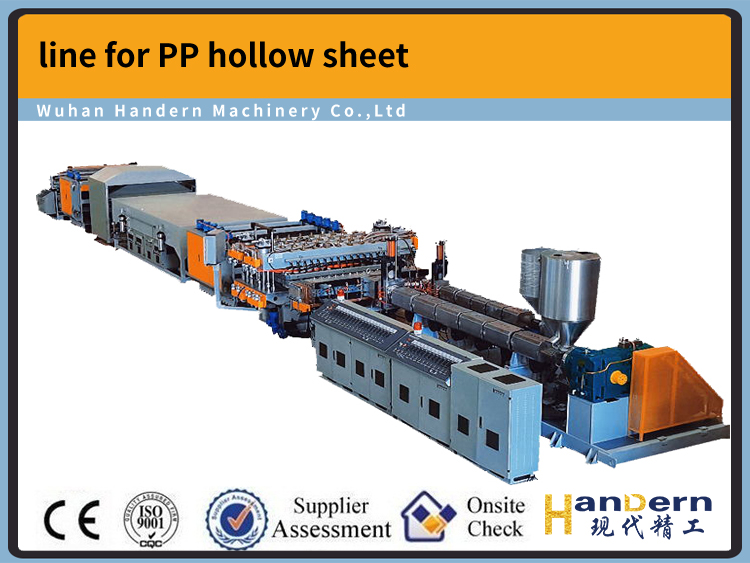
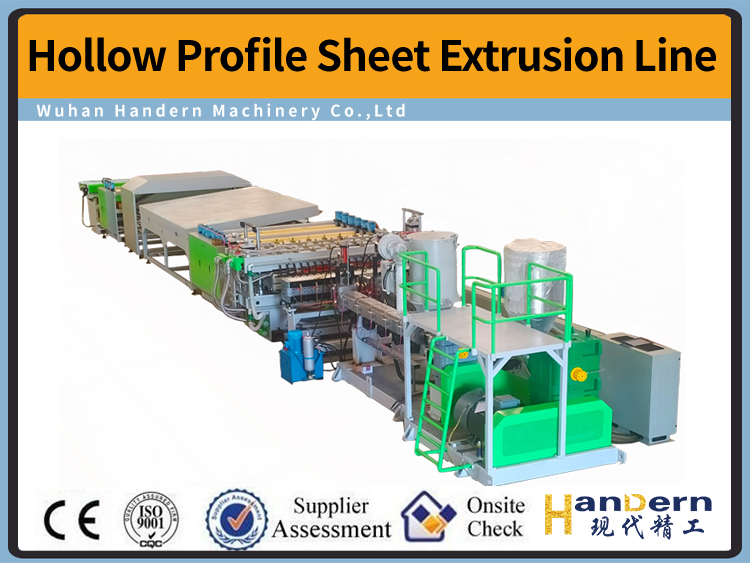
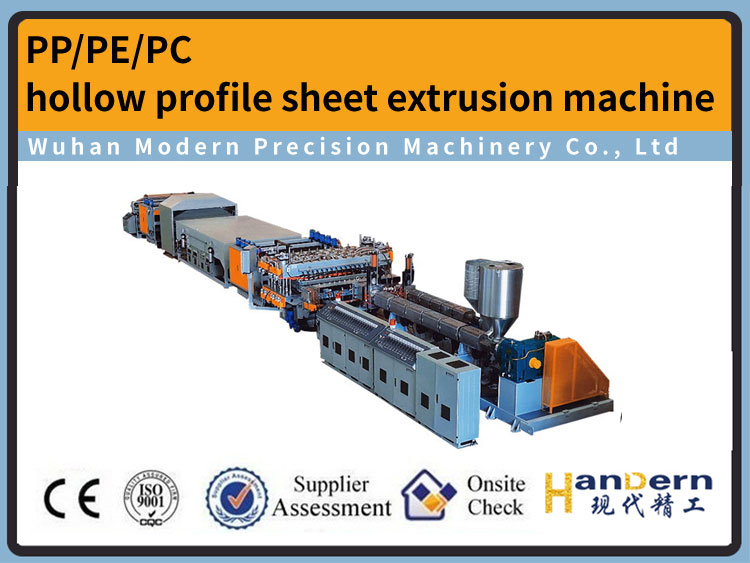
Fourth, Handern: A leading global manufacturer of hollow sheet extrusion equipment. Wuhan Handern Machinery Co., Ltd., whose predecessor can be traced back to the Wuhan Handern Plastics Technology Research Institute established in 1991, is a pioneer in China's plastic extrusion machinery industry and a national-level specialized and innovative "little giant" enterprise. The company's sales of plastic hollow sheet production lines have gradually reached the number one position globally.

Handern's world-first one-step hollow sheet manufacturing process simplifies the traditional two-step process (first making filler masterbatch and then extruding the sheet) into a single direct extrusion step. Calcium carbonate filling can reach 60%-70%, significantly reducing raw material costs while ensuring the sheet's mechanical properties and moisture resistance.
The company provides a one-stop integrated solution, from factory planning, equipment installation, production debugging, material formulation, technical support, personnel training to market guidance and after-sales maintenance, ensuring rapid project implementation and efficient operation for clients.
PPWR is not an environmental initiative, but a market entry threshold. In an era where the EU uses compliance to screen suppliers, whoever can provide a complete, traceable, and compliant packaging solution the fastest is more likely to win orders. Hollow sheet packaging boxes may be your next "passport" to the EU market.
Author:admin